
Ancient Egyptian Color, Pattern and Motif inspiration.
Ancient Egypt encompassed many centuries and included a myriad of dynasties and rulers, lasting from 3100BCE to 30CE when it was conquered by the Romans.
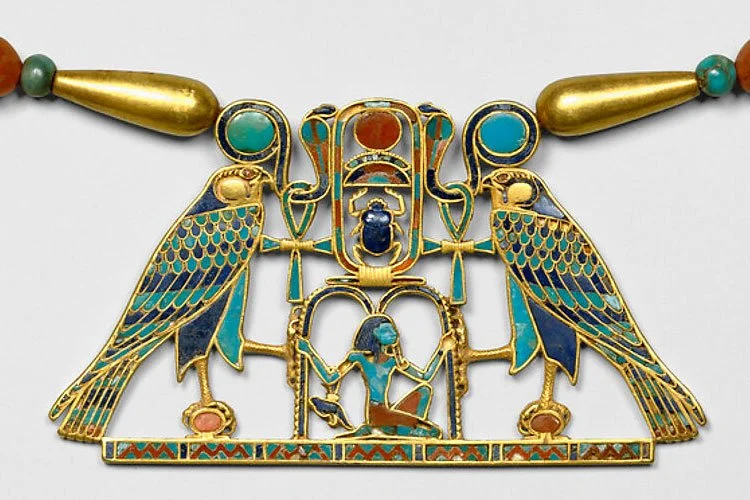
An elaborate cloisonné Egyptian falcon pectoral with semi-precious stones. It resides at the Met musuem in NYC and according to their website the design is composed around the throne name of King Senwosret II. Middle Kingdom. Gold, carnelian, lapis lazuli, turquoise, garnet and green feldspar.
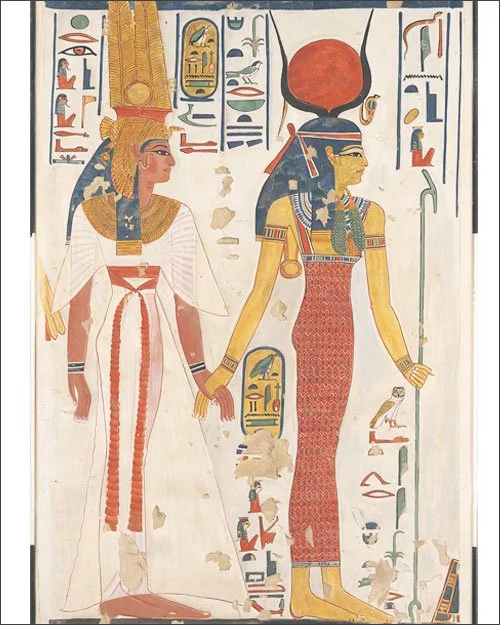
A facsimile of a wall painting of Isis leading Queen Nefertari from the Queen's magnificent tomb. Nefertari was the main wife of Ramses II. This is a watercolor rendition by Charles K. Wilkinson, the original tomb painting is from 1279–1213 B.C., New Kingdom.
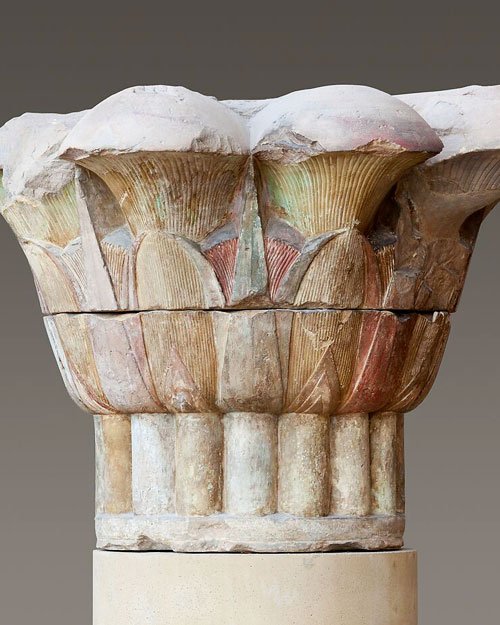
A composite capital with stylized papyrus and foxtail flatsedge design. This was one of ten columns that stood in of the temple of Amun at Hibis in Kharga Oasis. Late period, 380–343 B.C, Met Museum.
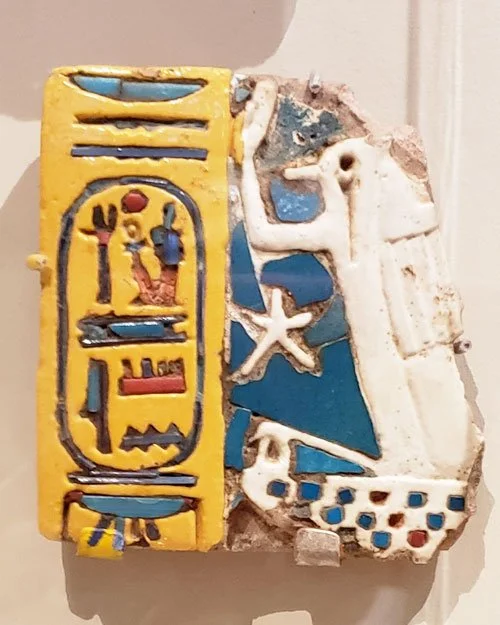
A colorful tile fragment from the Institute for the Study of Ancient Cultures.
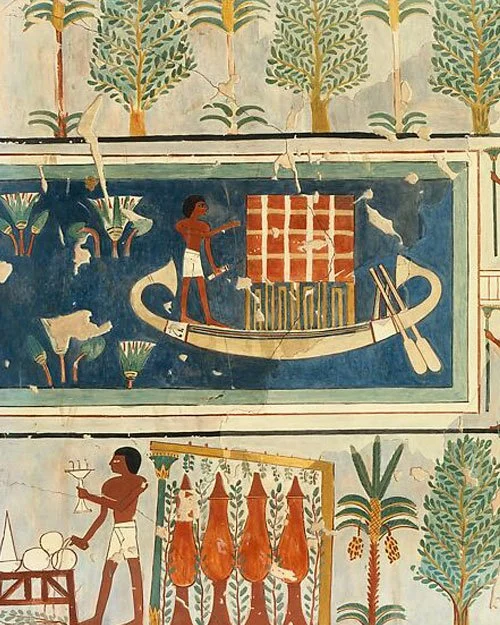
Detail from a facsimile painting by Charles K. Wilkerson of the tomb of Minnakht which shows a garden, pools and trees. The original wall painting is from 1479–1425 B.C., New Kingdom. The facsimile painting is from 1921. Met musuem.
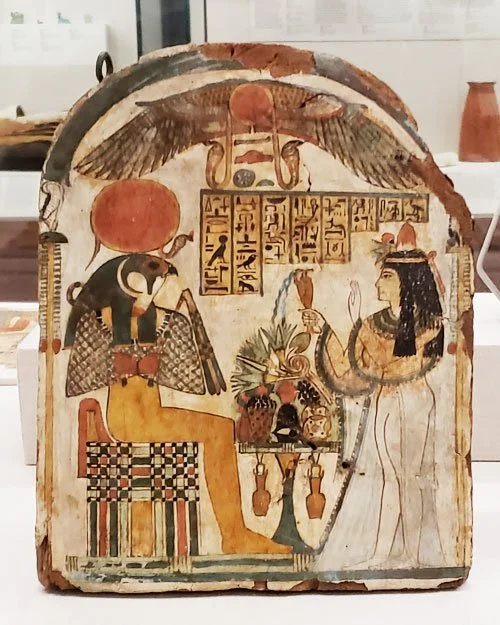
A funerary stela from a private tomb showing lady Djed-Khonsu-iw-es-ankh. She is seated across from god Re-Horakhty, a form of the sun god.
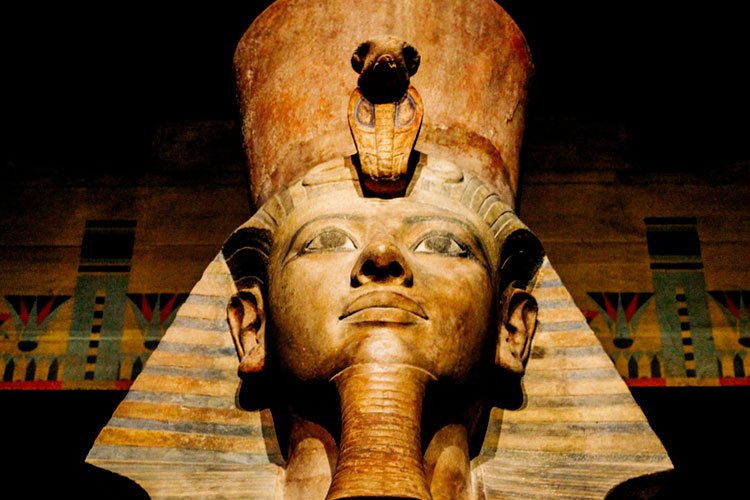
A detail of the colossal statue of King Tut at the Institute for the Study of Ancient Cultures on the University of Chicago campus. This statue is one of a set, given to the museum by the Egyptian government, the other is at the Egyptian Museum in Cairo.
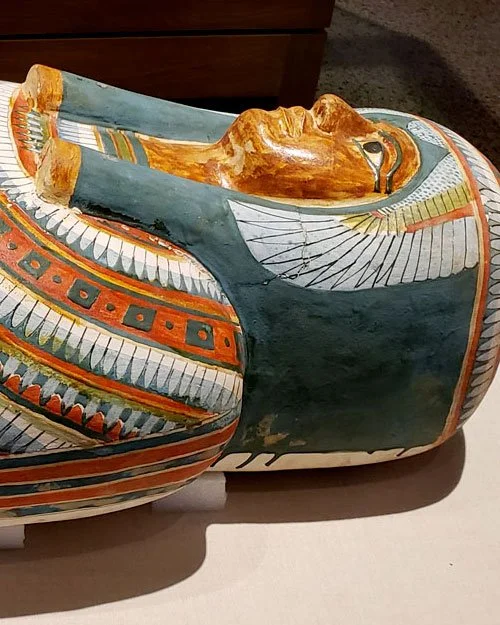
Detail from ancient Egyptian coffin of the priestess Meresamum at the Institute for the Study of Ancient Cultures in Chicago.
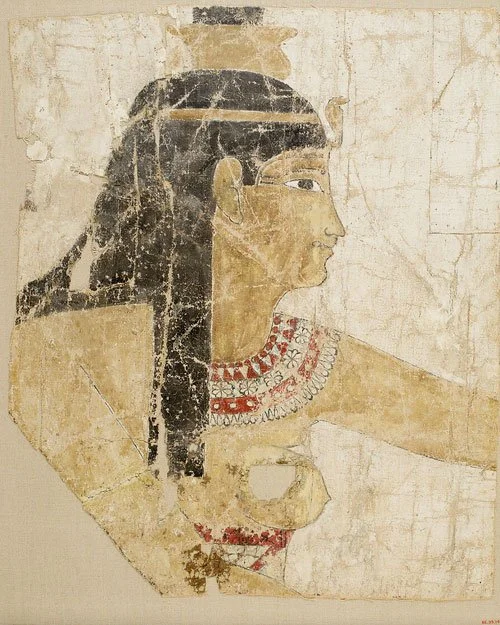
A painted shroud fragment of the goddess Isis made of gesso, linen and paint. From the Ptolemaic or Roman Period, 1st century BC–1st century AD. Met museum.
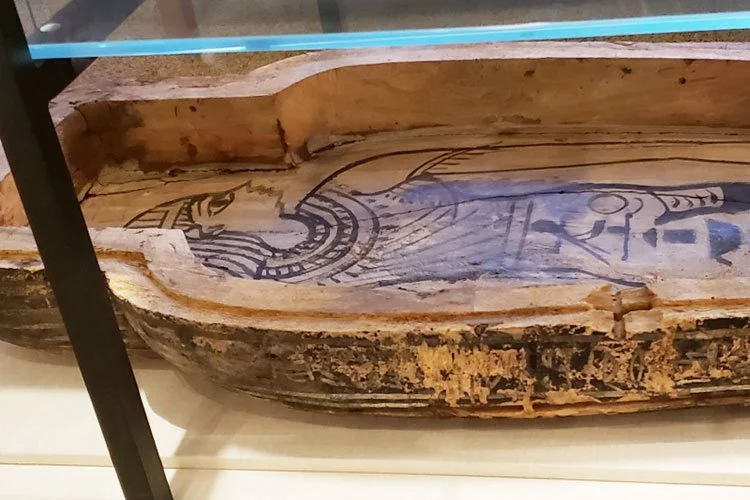
Interior of wooden Egyptian coffin with decoration. Institute for the Study of Ancient Cultures, University of Chicago campus.
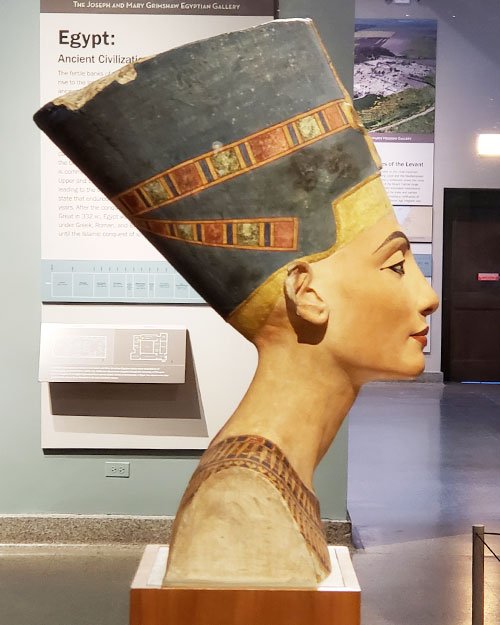
Bust of Queen Nefertitit, step-mother to King Tut. This is not he original but rather a casting of the famous Nefertiti bust that can be found in the Neues Museum in Berlin. The original was excavated by the German Oriental Society in 1912. The original is also missing the left eye but in the modern cast, the eye is restored. This cast is at the Institute for Ancient Cultures, University of Chicago.
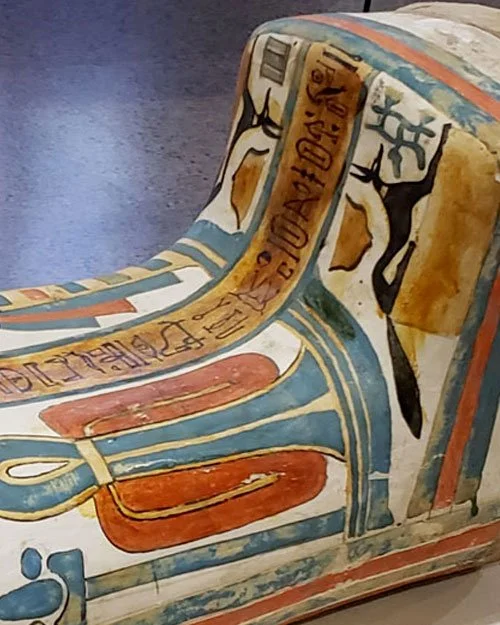
Detail from painted coffin showing the god Anubis at the foot. Institute for the Study of Ancient Cultures, Chicago.
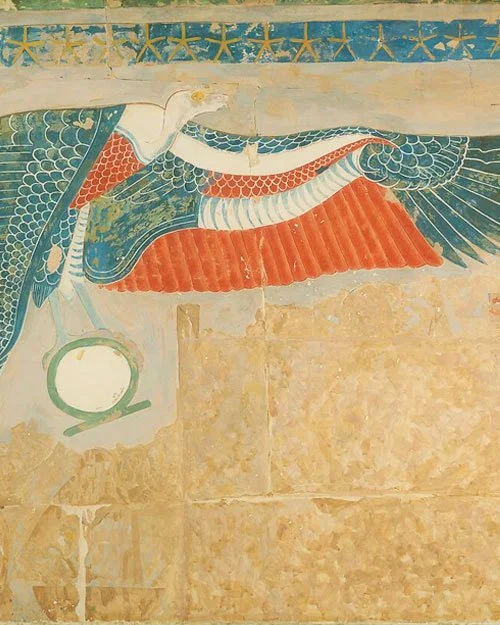
Detail of facsimile of wall painting by Charles K Wilkerson which shows the Goddess Nekhbet, from the Temple of Hatshepsut. 1479–1458 B.C. New Kingdom. Met museum.